
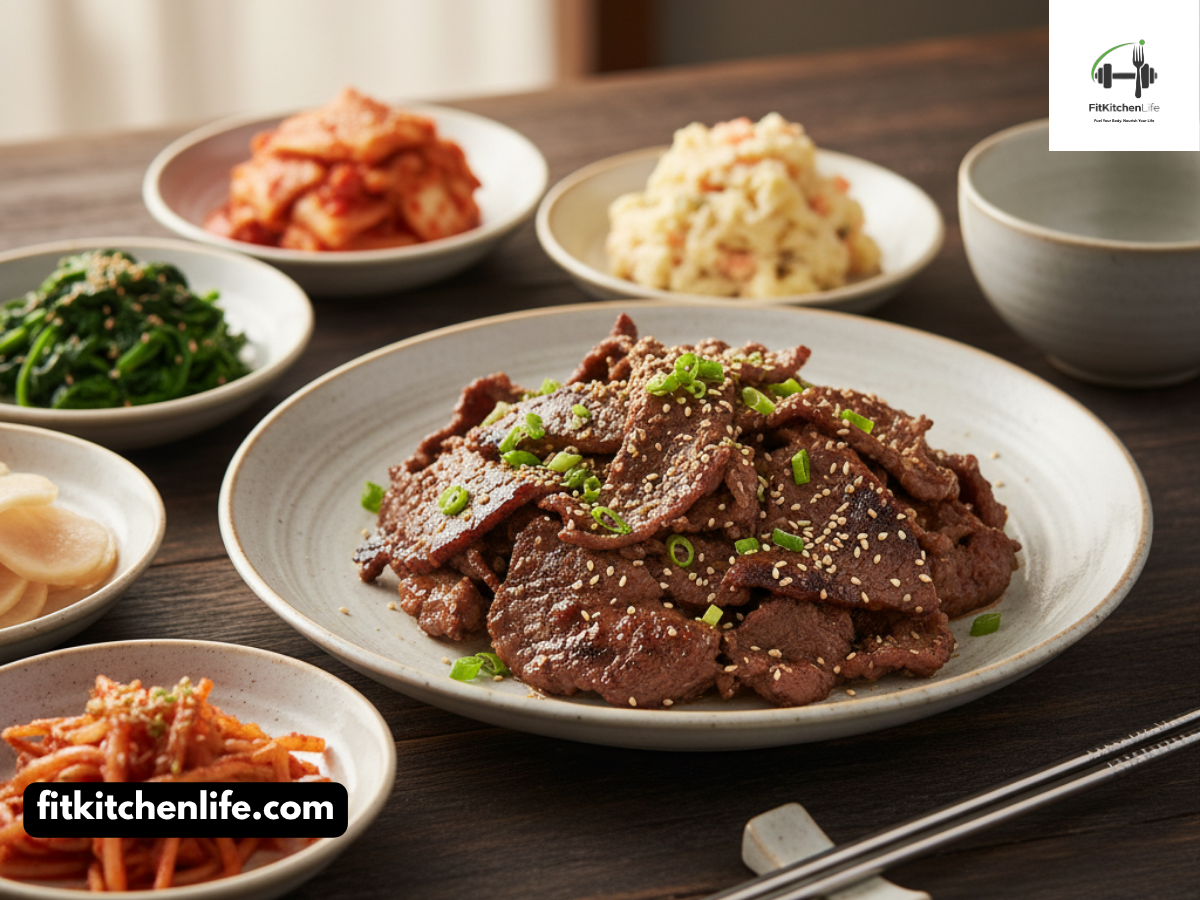
If you’ve ever strolled past a Korean BBQ restaurant and caught that irresistible smoky aroma wafting through the air, chances are you’ve met Bulgogi—Korea’s beloved grilled beef. Literally translating to “fire meat” (불고기), this dish captures everything Korean cuisine celebrates: balance, depth, and community.
Originating during the Goguryeo dynasty nearly 2,000 years ago, Bulgogi began as thin slices of marinated beef grilled over open flames—a delicacy once reserved for royalty. Today, it’s a cherished comfort food that brings families and friends together around tabletop grills or sizzling cast-iron pans.
What makes this traditional Bulgogi recipe special is its perfect harmony of flavors—sweet, salty, smoky, and umami-rich—achieved through an authentic marinade of soy sauce, pear, garlic, and sesame oil. The result? Tender, caramelized beef that melts in your mouth.
Ingredients (Serves 4–6)
Main Ingredients
-
1 ½ lbs (680 g) ribeye or sirloin beef, thinly sliced against the grain
-
1 small Korean pear (or Asian pear), grated (acts as a natural tenderizer)
-
½ medium yellow onion, grated
-
3 green onions, finely chopped
-
4 garlic cloves, minced
-
2 tbsp brown sugar
-
3 tbsp soy sauce (regular, not low sodium)
-
2 tbsp sesame oil
-
1 tbsp mirin (Korean rice wine)
-
½ tsp freshly ground black pepper
-
1 tbsp toasted sesame seeds
-
1 tbsp neutral oil (like vegetable or canola, for grilling)
Optional Additions
-
½ small carrot, julienned (for added texture)
-
½ tsp gochugaru (Korean red chili flakes) for mild heat
-
1 tsp honey for extra caramelization
Substitutions
-
Beef alternative: Chicken thigh, pork shoulder, or firm tofu (for a lighter or vegetarian twist).
-
Pear substitute: Use ½ apple and 1 tsp sugar if Asian pear isn’t available.
-
Gluten-free: Use tamari or coconut aminos instead of soy sauce.
Instructions
-
Prep the Beef (10 min): Partially freeze beef for 30 minutes before slicing for paper-thin cuts.
-
Make the Marinade (5 min): In a large bowl, combine grated pear, onion, garlic, soy sauce, brown sugar, sesame oil, mirin, and black pepper. Mix well.
-
Marinate (30 min–4 hrs): Add sliced beef and green onions to the bowl, coating evenly. Cover and refrigerate. (Longer marination yields deeper flavor.)
-
Preheat Grill or Pan (5 min): Heat a cast-iron skillet, griddle, or BBQ grill over medium-high heat. Lightly brush with neutral oil.
-
Cook the Bulgogi (8–10 min): Add marinated beef in a single layer. Grill or sear until browned and slightly charred, about 2–3 minutes per side.
-
Pro Tip: Don’t overcrowd the pan—cook in batches for even caramelization.
-
-
Garnish & Serve (2 min): Sprinkle with toasted sesame seeds and extra chopped green onions.
Recipe Info Box
| Category | Details |
|---|---|
| Prep Time | 20 minutes (plus marination) |
| Cook Time | 10 minutes |
| Total Time | 45 minutes–4 hrs (depending on marination) |
| Servings | 4–6 |
| Difficulty Level | Easy |
| Course | Main Course |
| Cuisine Style | Korean BBQ |
Nutrition Information (Per Serving)
| Nutrient | Amount |
|---|---|
| Calories | 320 kcal |
| Protein | 28 g |
| Carbohydrates | 10 g |
| Fat | 18 g |
| Fiber | 0.8 g |
| Sugar | 7 g |
| Sodium | 640 mg |
| Iron | 2.4 mg |
| Vitamin B12 | 0.9 µg |
Values are estimates and may vary based on ingredients.
Health Note: Bulgogi is rich in high-quality protein, iron, and B vitamins. The pear and garlic offer natural antioxidants that aid digestion and immunity.
Tips, Variations & Notes
-
For tender beef: Always slice against the grain.
-
Quick version: Use thinly sliced beef from an Asian market (often labeled “shabu-shabu cut”).
-
Make-ahead tip: Marinate overnight for deeper flavor.
-
Storage: Store cooked bulgogi in the fridge for up to 3 days or freeze for 2 months.
-
Reheating: Warm on a skillet over medium heat; avoid microwaving to prevent dryness.
-
Serve traditionally: With lettuce wraps (ssam), rice, and kimchi.
-
Add vegetables: Include mushrooms or sliced onions for a bulgogi stir-fry twist.
-
Outdoor grilling: Use a wire mesh grate for authentic smoky notes.
-
Non-alcoholic marinade: Replace mirin with apple juice.
-
Caramelization tip: Let the beef sear untouched for 1–2 minutes before stirring.
Equipment Needed
-
Mixing bowls
-
Grater or food processor
-
Sharp chef’s knife
-
Cast-iron skillet, grill pan, or outdoor BBQ grill
-
Tongs or chopsticks
-
Measuring spoons and cups
FAQs
1. Can I use chicken or pork instead of beef?
Yes! Bulgogi can be made with chicken (dak bulgogi) or pork (dwaeji bulgogi). Adjust cooking time slightly.
2. Can I prepare it ahead of time?
Absolutely. Marinate the beef a day ahead and store it in the refrigerator.
3. How long does bulgogi last in the fridge?
Up to 3 days in an airtight container.
4. Can I freeze it?
Yes, marinated or cooked bulgogi freezes well for up to 2 months.
5. Is it spicy?
Traditional beef bulgogi is not spicy, but you can add gochugaru or gochujang for heat.
6. What cut of beef is best?
Ribeye or sirloin are ideal for tenderness and flavor.
7. Can I cook bulgogi without a grill?
Yes, a hot cast-iron pan works perfectly.
8. Is it kid-friendly?
Definitely! It’s sweet, savory, and mild in flavor.
9. Can I make it low-sodium?
Use reduced-sodium soy sauce and skip added salt.
10. What sides go best with bulgogi?
Steamed rice, kimchi, japchae (glass noodles), or pickled radish.
Recipe Story & Cultural Context
Bulgogi is deeply rooted in Korean history. Originally called maekjeok during the Goguryeo period, it evolved from grilled skewered beef cooked over charcoal fires. Over centuries, regional variations emerged—Seoul’s bulgogi tends to be sweeter, while Gyeonggi-do’s version includes more soy and garlic.
Today, Bulgogi isn’t just food—it’s an experience. Families gather around tabletop grills to cook it communally, symbolizing togetherness and warmth. It’s also one of Korea’s most internationally recognized dishes, serving as a flavorful gateway to the country’s cuisine.
Pairing Suggestions
-
Drinks: Serve with Korean soju, light lager, or jasmine iced tea.
-
Sides: Kimchi, steamed white rice, Korean potato salad, or lettuce wraps.
-
Occasions: Perfect for backyard BBQs, family dinners, or festive gatherings.
-
Seasonal Pairing: Add cold cucumber salad in summer or hot doenjang soup in winter.
Conclusion
Korean Bulgogi BBQ captures everything wonderful about Korean food—sweet, savory, smoky, and shared. Whether grilled outdoors or sizzled on your stovetop, its rich aroma and caramelized taste make every bite unforgettable.
Try this authentic recipe at home, and bring the warmth of a Korean BBQ table to your kitchen. Don’t forget to share your creation online with the hashtags below and tag your friends for your next “fire meat” feast!
#KoreanBulgogi #KoreanBBQ #AuthenticBulgogi #Foodie #FoodPhotography #AsianCuisine #KoreanFoodLover #GrilledBeef #DinnerRecipes #EasyAsianMeals #Tasty #Foodstagram #HomeCooking #BBQLovers #KoreanRecipes #InstaFood #FoodLover #QuickMeals #MealPrep #Yummy